
Developing Optimized &
Production-Ready Products
From initial concept sketch to high-volume manufacturing, we engineer high-performance plastic components, optimize tooling feasibility, and reduce manufacturing costs without compromising structural integrity or aesthetic quality.

Key Capabilities
3D CAD Part & Assembly Design
End-to-end parametric modeling, conceptual 3D development, and production-ready CAD geometry.
B-Side Engineering
Ribs, bosses, clips, gussets, snaps, and mounting features maintaining class-A surface integrity.
Metal-to-Plastic Conversion
Transforming heavy stamped or machined metal parts into lightweight, corrosion-free molded plastics.
Part Integration & Part-Count Reduction
Consolidating sub-assemblies into single integrated parts to eliminate fasteners and simplify assembly.
Weight & Material Optimization
Strategic wall-thickness distribution and rib placement to minimize resin usage and component weight.
Cost Reduction through Design Optimization
Optimizing cycle times, tooling complexity, and secondary operations for maximum manufacturing efficiency.
Customer Benefits
Engineered for Manufacturability
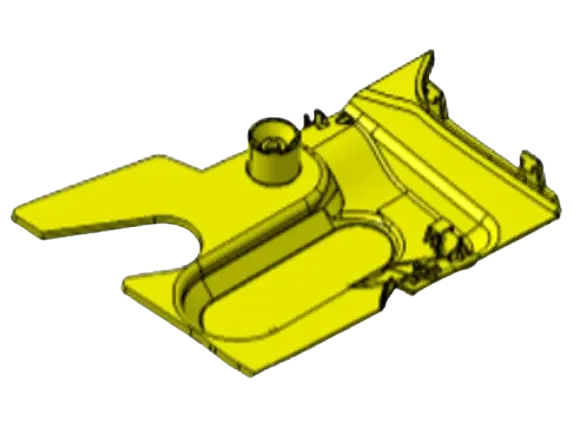
Detailed 3D CAD modeling representing automotive interior integration, functional B-side geometry, and metal-to-plastic component conversions.
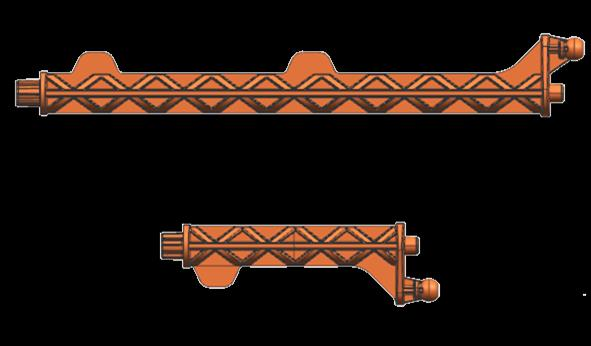
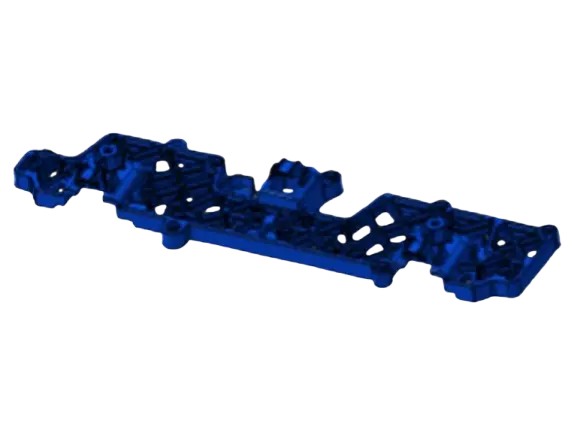
B-Side Structural Ribs & Bosses
Reinforcement ribs and gusset networks optimized for stiffness and sink-mark prevention.
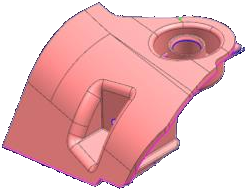
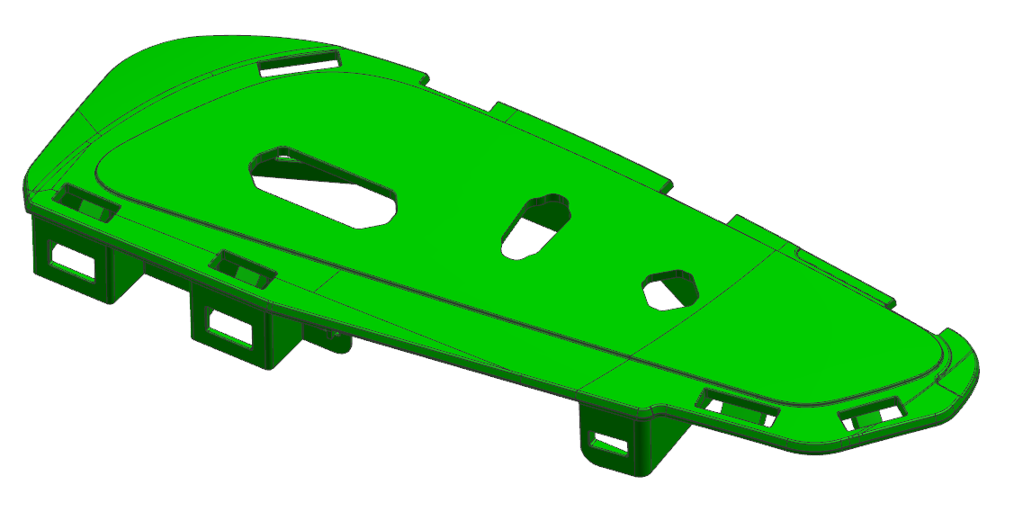
Precision Molded Housings
Injection-molded component geometry with uniform wall thickness and precise draft angles.
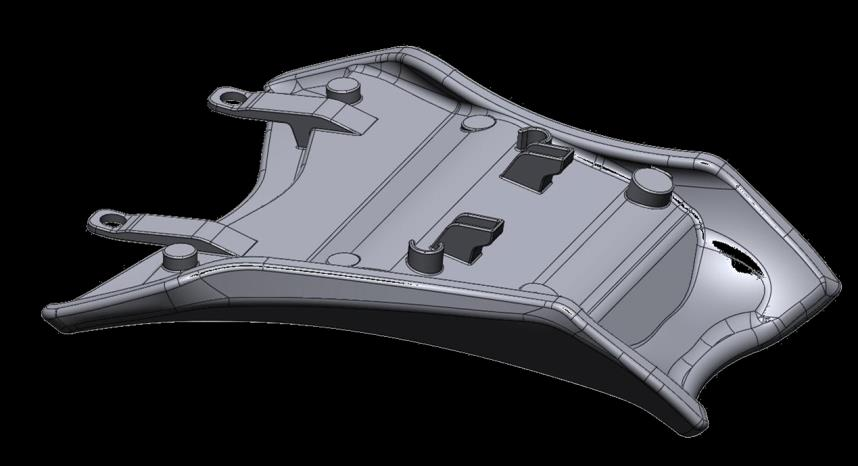
Structural Brackets & Fasteners
Consolidated high-load mounting bracket converted from stamped sheet metal.
Delivering Tangible Engineering Value
Predict & Optimize Before Tooling
UViL Technology delivers precision simulation across all critical phases of the injection molding process. From initial fill analysis through complete thermal behavior modeling, our simulation-driven approach identifies defects early, optimizes process parameters, and ensures your mold design is production-ready before tooling begins.
Fill Analysis
Flow front progression, injection pressure, shear rate distribution, weld lines, and air trap detection.
Pack Analysis
Packing pressure distribution, volumetric shrinkage prediction, and frozen layer formation analysis.
Cool Analysis
Mold temperature distribution, thermal behavior modeling, cycle time optimization, and cooling efficiency.
Warp Analysis
Warpage prediction, part deformation mapping, and dimensional accuracy validation across the component.
Clamp Force Analysis
Accurate injection machine tonnage calculation, cavity pressure distribution, and parting line lock-up evaluation.
2K Simulation
Sequential two-material molding analysis, material interaction, interface integrity, and dual-shot cycle optimization.


2K Moldflow Simulation Analysis
2K molding combines two materials or colors in a single molding cycle, producing parts with superior functionality and aesthetics. Our sequential flow simulation captures the full two-shot process, analyzing fill front progression, material interface, shrinkage, warpage, and cycle time for both shots simultaneously.
Our deliverables include fill, pack, cool & warp analysis for both shots, gate location and process recommendations, defect prediction, and cycle time optimization resulting in enhanced part durability, refined aesthetics, and measurable cost reduction in tooling and production.
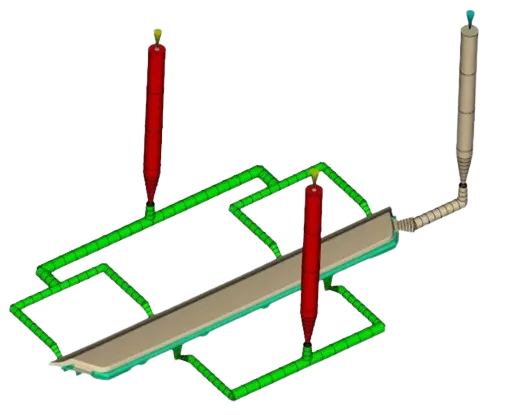
Conformal Cooling Solutions
Cycle Time Dominance
Cooling accounts for 60–80% of total cycle time. Optimizing thermal management is the single most impactful lever for production efficiency.
Conformal Channel Advantage
Unlike straight-drilled channels, conformal cooling lines follow the contours of the mold cavity, delivering uniform heat removal across complex geometries.
Key Performance Benefits
Reduced cycle time, minimized warpage and sink marks, improved surface finish, and significant productivity gains across high-volume production runs.


From Concept to
Production-Ready Mold
Our mold design engineering workflow bridges product development and volume production. We provide structured engineering across three dedicated phases—from foundational tooling architecture through complete 3D mold assembly, cooling, pocketing, and final procurement BOM deliverables.
Preliminary Mold Design
The preliminary stage establishes the foundational tooling architecture. We define the overall mold size, cavity arrangement, runner and gate locations, mechanism proposals, and core-pin configurations to confirm machine fitment, clamp tonnage suitability, and molding feasibility before heavy machining begins.

Mold Base & Cavity Layout
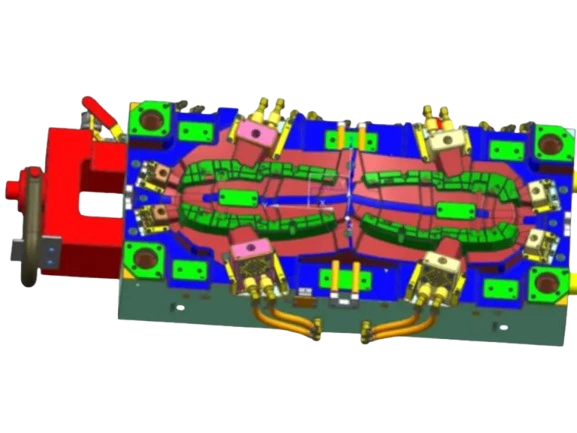
Runner & Mechanism Concept
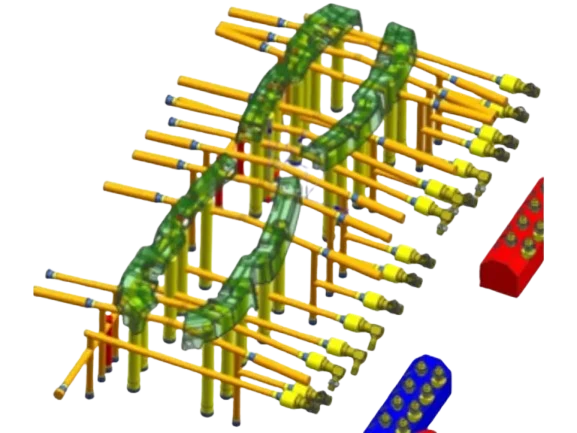
Integrated Cooling Channels

Lifter & Slide Mechanisms
Intermediate Mold Design
The intermediate stage integrates all internal and external mold operating systems. Rough core and cavity 3D models can be provided to begin CNC roughing and steel ordering while the final fine features are detailed.
Complete Cooling System Layout
Engineered cooling channels for uniform thermal distribution, minimized hot spots, and reduced cycle time.
Full Ejection System Components
Detailed ejector pins, sleeves, blade ejectors, and return pins designed for balanced and clean part release.
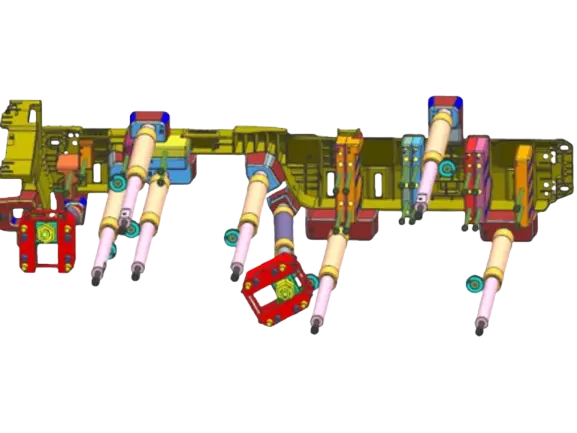
External Mold Mechanism Integration
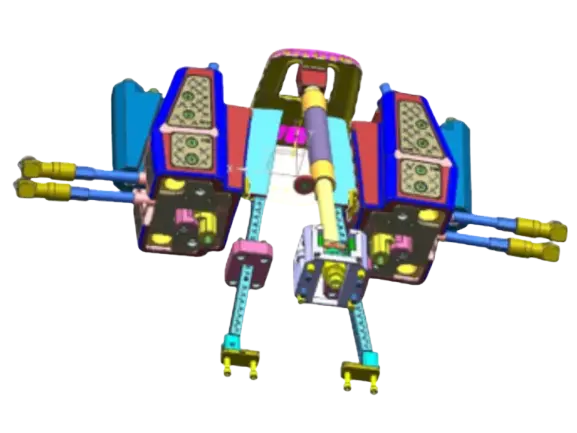
Comprehensive integration of side actions, angle pins, slides, hydraulic cylinders, and lifters.
Initial BOM Release for Procurement
Preliminary Bill of Materials enabling early steel block procurement, standard component ordering, and machining start.
Final Mold Design & Complete BOM
The final mold design stage delivers a fully resolved, production-ready engineering package encompassing all critical details required for manufacturing sign-off and shop-floor machining.

Full 3D Mold Assembly & Pocketing
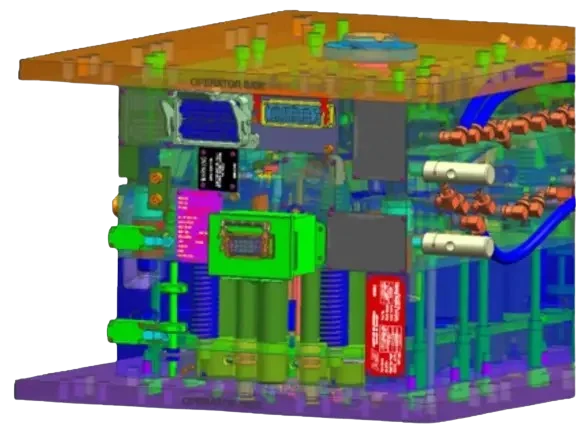
Final Bill of Materials (BOM) & 2D Drawings
Venting Details & Surface Relief Features
Precise vent placement, depth specifications, and surface relief geometry to eliminate air traps, burns, and ensure clean part ejection.
Complete 3D Design with Pocketing
Fully detailed core and cavity 3D models including all pocketing, insert seats, water manifold routing, and component interfaces.
Final Bill of Materials (BOM)
Comprehensive component listing covering all mold elements, standard parts (Hasco/DME/Misumi), and custom components with supplier references.
Assembly 2D Drawings
Full dimensioned 2D assembly drawings available upon request, supporting shop floor toolroom manufacturing and quality inspection.
Manufacturing-Ready Mold Engineering
Manufacturing Engineering &
DFM Feasibility
Applying DFM, DFA, and tooling feasibility principles to ensure products are designed for efficient manufacturing, simplified assembly, and minimal tooling risk.
Early-Stage Feasibility Analysis
Comprehensive Design for Manufacturability review identifying potential molding issues before steel is cut.
Part Feasibility & Draft Analysis
Comprehensive part feasibility review including draft angle verification, texture draft assessment, and surface quality evaluation for optimal moldability.
Undercuts & Parting Line Assessment
Identify undercut regions, define parting lines, and validate shut-off surfaces for clean separation and minimal tooling complexity.
Feed System & Wall Thickness Evaluation
Analyze runner layout, gate location, wall thickness uniformity, and sink-mark risk zones for balanced fill and structural integrity.
Mechanism Pre-Planning & Shut-Off Verification
Pre-plan slides, lifters, and core-pull mechanisms with shut-off angle verification and mold sequence compatibility checks.
Mold Mechanism & Assembly Review
Review mold mechanisms, component clearances, and assembly relationships early to support reliable tooling execution.

From Mold Readiness to Efficient Production
Our production support services help ensure a smooth transition from mold development to stable, efficient, and production-ready injection molding. We evaluate key manufacturing requirements and optimize the process to improve productivity, quality, and cost efficiency.
Part Weight Optimization
Analyze and optimize part weight to minimize material consumption while maintaining performance and dimensional requirements.
Machine Tonnage Selection
Determine the appropriate machine tonnage based on part geometry, projected area, material, and mold configuration.
Process Optimization
Review and optimize molding parameters, cycle times, and processing conditions for consistent and efficient production.
Molding Feasibility
Assess part designs for manufacturability and identify potential molding challenges before production.
Production Readiness
Evaluate the mold, part, material, machine, and process to ensure readiness for series production.
Technical Troubleshooting
Identify production issues and provide practical solutions to improve part quality, process stability, and overall performance.
Our goal is simple: reduce production risks, optimize manufacturing performance, and ensure a smooth path to reliable series production.
Integrated Development Cycle
Design → Simulate → Engineer → Design the Mold → Support Production.
01 Design
Concept, 3D CAD, and value engineering to create optimized, production-ready products.
02 Simulate
Fill, pack, cool, warp, clamp force, and 2K studies to validate part and process feasibility before tooling.
03 Engineer
DFM, DFA, and tooling feasibility reviews covering draft, assembly, mechanisms, and manufacturability.
04 Design the Mold
Layout, mechanisms, cooling, ejection, venting, integration, and BOM for manufacturing start.
05 Support Production
Part weight, machine tonnage, optimization, molding feasibility, and production-readiness assessments.
Ready to Elevate Your
Mold Design & Simulation?
Partner with our expert engineers to validate part feasibility, optimize cycle times with conformal cooling, and receive production-ready mold designs.